Quick Answer
Yes, sustainable travel can be absolutely luxurious. Destinations like Costa Rica (Nayara Springs), Botswana (Mombo Camp), Bali (Capella Ubud), the Galapagos (Silver Origin), and New Zealand (The Farm at Cape Kidnappers) prove that eco-luxury is real—offering private plunge pools, award-winning spas, farm-to-table dining, and world-class service while running on solar power, supporting local communities, and funding wildlife conservation. To travel sustainably without sacrificing luxury, choose certified properties, stay longer in fewer places, support local communities, choose ethical wildlife experiences, and offset your carbon footprint.
The False Choice Between Luxury and Sustainability
There is a persistent myth in travel that sustainability means sacrifice. That choosing an eco-friendly resort means giving up the butler, the fine dining, the plunge pool. That traveling responsibly means roughing it. This could not be further from the truth. In fact, the most luxurious resorts in the world are often the most sustainable—because true luxury means having everything you need without compromising the place that gives it to you.
At Elevated Journeys, we believe that the most extraordinary travel experiences are those that respect and preserve their surroundings. We curate sustainable luxury experiences that prove you do not have to choose between indulging yourself and protecting the planet.
What Is Sustainable Luxury Travel?
Sustainable luxury travel means experiencing the highest level of comfort and service while minimizing environmental impact and supporting local communities. It is built on three pillars:
- Environmental sustainability: Solar power, water conservation, waste reduction, and architecture that works with the landscape rather than against it.
- Community support: Employing local staff, sourcing from local suppliers, supporting community projects, and ensuring tourism dollars stay in the community.
- Wildlife conservation: Protecting natural habitats, supporting anti-poaching efforts, and ensuring wildlife encounters are ethical and non-intrusive.
Destinations Leading the Sustainable Luxury Movement
1. Costa Rica: The Pioneer of Eco-Luxury
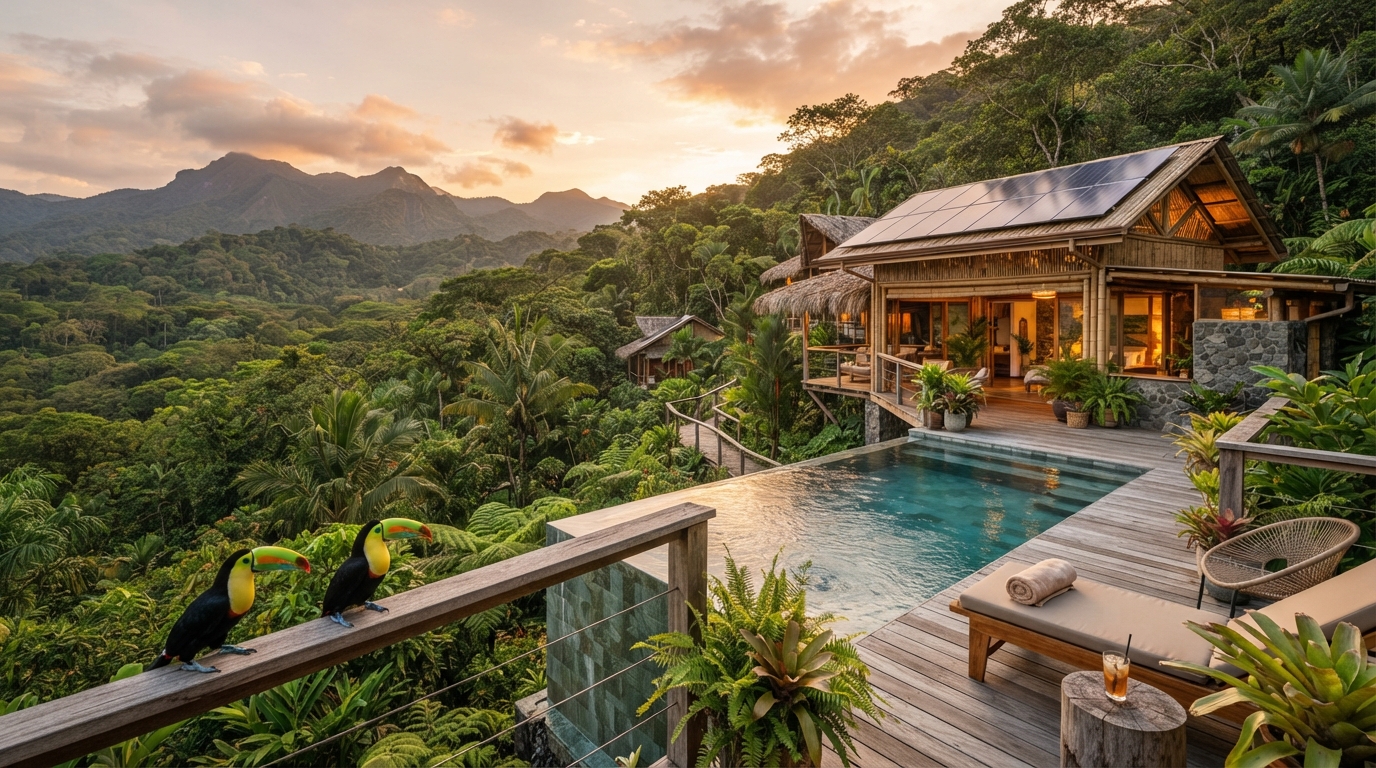
Costa Rica has been at the forefront of sustainable tourism for decades. Luxury eco-lodges like Nayara Springs and Arenas del Mar blend seamlessly into the rainforest, powered by solar energy and built from sustainably sourced materials. Activities include guided wildlife tours with local naturalists, visits to conservation projects, and farm-to-table dining sourced from on-site organic gardens.
Why it is luxurious: Private plunge pools overlooking the rainforest, award-winning spas using natural ingredients, and wildlife that comes to you—toucans at breakfast, sloths in the trees above your villa.
2. Botswana: Conservation Through Luxury
Botswana's high-value, low-volume tourism model is the gold standard for sustainable safari travel. By limiting visitor numbers and charging premium rates, Botswana ensures that tourism directly funds conservation. Luxury camps like Mombo Camp and Chief's Camp are built with minimal environmental footprint and are deeply integrated with local communities.
Why it is luxurious: Some of the most exclusive safari experiences in Africa, with private game drives, expert trackers, and suites that rival any five-star hotel—all while directly funding wildlife conservation. Read our safari guide.
3. Bali: Community-Centered Wellness
Bali's luxury wellness retreats are deeply rooted in the island's cultural and spiritual traditions. Properties like Capella Ubud and Bambu Indah are built from natural and recycled materials, employ local staff, and integrate Balinese healing traditions. The experiences—temple visits, rice field walks, traditional ceremonies—directly support the local community.
Why it is luxurious: Private villas with infinity pools overlooking jungle valleys, personalized wellness programs with traditional healers, and cuisine sourced from on-site organic gardens. Read our wellness retreat guide.
4. The Galapagos: Tourism That Funds Conservation
Luxury expedition cruising in the Galapagos directly funds the conservation of one of the world's most fragile ecosystems. Park entrance fees and cruise revenues support the Galapagos National Park, and strict visitor guidelines ensure minimal impact. Ships like Silversea's Silver Origin are designed with sustainability at their core.
Why it is luxurious: All-suite accommodations with butler service, expert naturalist guides, and intimate wildlife encounters with animals that have no fear of humans. Read our expedition cruise guide.
5. New Zealand: Luxury With a Conscience
New Zealand's luxury lodges are leaders in sustainable hospitality. Properties like The Farm at Cape Kidnappers and Minaret Station operate on the principle that luxury and environmental stewardship are inseparable. Solar power, predator-free conservation programs, and farm-to-table cuisine are standard.
Why it is luxurious: Spectacular remote settings, world-class dining, private guides, and the satisfaction of knowing your visit directly supports conservation.
How to Travel Sustainably Without Sacrificing Luxury
- Choose properties with genuine sustainability credentials: Look for certifications like EarthCheck, Green Globe, or National Geographic Unique Lodges. We vet every property we recommend.
- Stay longer in fewer places: Slow travel reduces your carbon footprint and deepens your experience. Learn about slow travel.
- Support local communities: Eat at local restaurants, buy from local artisans, and choose experiences that directly benefit the community.
- Choose ethical wildlife experiences: Avoid any experience that exploits animals. We only recommend wildlife encounters that are non-intrusive and conservation-focused.
- Offset your carbon footprint: We can arrange carbon offsets for your flights and ground transportation through verified programs.
The Future of Luxury Is Sustainable
The most forward-thinking luxury properties understand that their long-term survival depends on protecting the places that make them special. When you choose sustainable luxury, you are not just having a better experience—you are ensuring that these extraordinary places will be there for the next generation of travelers.
Ready to Travel Responsibly and Luxuriously?
Let us design a journey that indulges your senses and supports the planet. Schedule a consultation to start planning your sustainable luxury adventure. For more inspiration, explore our destinations guide or read about luxury wellness retreats.
Frequently Asked Questions
What is sustainable luxury travel?
Sustainable luxury travel means experiencing the highest level of comfort and service while minimizing environmental impact and supporting local communities. It is built on three pillars: environmental sustainability (solar power, water conservation, waste reduction), community support (local employment, local sourcing, community projects), and wildlife conservation (habitat protection, anti-poaching, ethical wildlife encounters).
Are eco-friendly resorts actually luxurious?
Yes. The most luxurious resorts in the world are often the most sustainable. Properties like Nayara Springs in Costa Rica, Mombo Camp in Botswana, and Capella Ubud in Bali offer private plunge pools, award-winning spas, farm-to-table dining, and butler service—all while running on solar power, using sustainable materials, and directly funding conservation. Sustainability and luxury are not opposing forces; they are complementary.
Which destinations are best for sustainable luxury travel?
Top destinations for sustainable luxury travel include Costa Rica (pioneer of eco-luxury), Botswana (conservation through high-value, low-volume tourism), Bali (community-centered wellness), the Galapagos (tourism that funds conservation), and New Zealand (luxury lodges with environmental stewardship). Each offers genuine luxury experiences that directly support environmental and community sustainability.
How can I travel more sustainably without giving up luxury?
Choose properties with genuine sustainability certifications (EarthCheck, Green Globe, National Geographic Unique Lodges), stay longer in fewer places to reduce your carbon footprint, support local communities by eating at local restaurants and buying from local artisans, choose ethical wildlife experiences that do not exploit animals, and offset your carbon footprint through verified programs. A luxury travel advisor can vet properties and arrange all of this for you.


Ready to write your own story?
Let us design a bespoke journey inspired by these destinations and experiences.
Inquire About Your Journey