Quick Answer
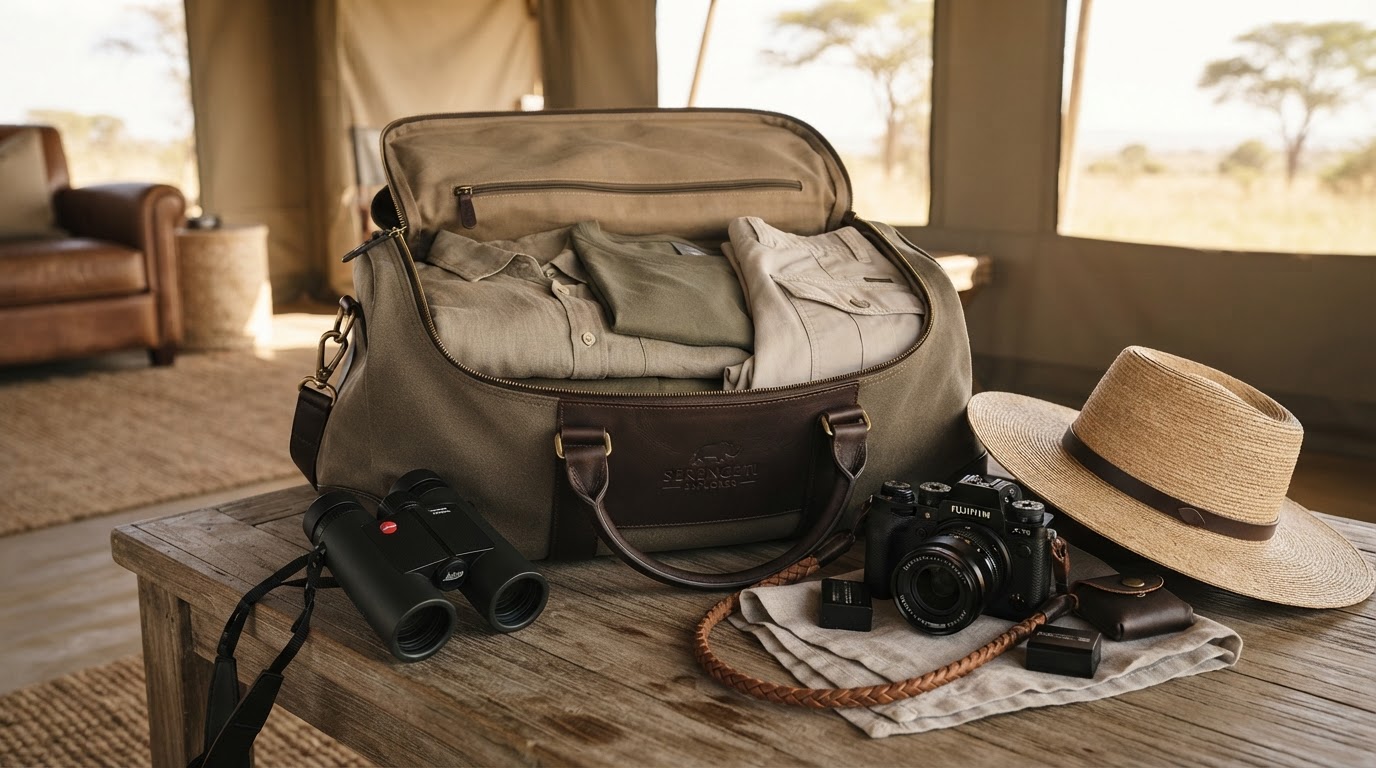
For a luxury African safari, pack neutral-tone clothing (khaki, olive, brown, beige) in layers for cold mornings and warm middays, a soft-sided duffel bag under 15-20 kg for bush flights, a warm fleece for early game drives, a wide-brimmed hat, polarized sunglasses, quality binoculars (8x42 or 10x42), a camera with a 200-400mm zoom lens, comfortable closed-toe shoes, and a small daypack. Do not pack camouflage (illegal in many African countries), white or bright colors, hard-shell suitcases, or valuables. Luxury camps offer complimentary laundry.
The Right Packing List Makes the Difference Between Comfort and Misery
You have booked your dream safari. You have imagined the game drives, the luxury lodges, the sundowners overlooking the savanna. But now you are staring at your suitcase, completely unsure of what to bring. Pack too much and you are lugging heavy bags between bush flights with strict weight limits. Pack too little and you are missing the one thing that would have made the trip perfect. And the advice online is contradictory—some say shorts, some say never shorts, some say white is fine, others say absolutely not.
After years of sending clients on luxury safaris, we have perfected the packing list. Here is exactly what you need—and what you do not.
The Golden Rules of Safari Packing
- Neutral tones only: Khaki, olive, brown, beige, and muted greens. Bright colors and white attract insects and stand out against the landscape. Blue and black attract tsetse flies in certain regions.
- Layers are essential: Morning game drives can be surprisingly cold (40-50°F in some regions), while midday is warm and sunny. The key is layers you can peel off as the day warms up.
- Soft-sided luggage only: Bush flights between camps use small aircraft with strict weight limits (typically 15-20 kg / 33-44 lbs total including carry-on). Soft duffel bags fit better in small cargo holds. Hard suitcases may be refused.
- Less is more: Most luxury camps offer complimentary laundry, so you do not need a fresh outfit for every day. Pack for 3-4 days and let the camp wash for you.
The Essential Safari Wardrobe
Clothing
- 2-3 lightweight long-sleeve shirts (neutral tones, breathable fabric—cotton or moisture-wicking)
- 2-3 lightweight short-sleeve shirts
- 1-2 pairs of long pants (convertible pants are practical but not stylish; we prefer lightweight chinos or safari trousers)
- 1 pair of comfortable shorts (for lounging at camp, not for game drives)
- 1 warm fleece or lightweight down jacket for early morning drives
- 1 lightweight waterproof windbreaker or rain jacket (especially if traveling in green season)
- 1 nicer outfit for evening dinners (smart casual—most luxury camps have a relaxed dress code)
- Comfortable closed-toe walking shoes (broken in before the trip)
- 1 pair of sandals or flip-flops for camp
- A wide-brimmed hat with a chin strap (essential for sun protection on open vehicles)
Accessories and Gear
- Good sunglasses with UV protection—polarized is best for reducing glare
- High-SPF sunscreen and SPF lip balm
- Binoculars—the single most important piece of gear. We recommend 8x42 or 10x42 magnification. Do not skimp on quality; you will use them constantly.
- Camera gear—a good zoom lens (200mm minimum, 400mm ideal) for wildlife photography. Bring extra batteries and memory cards; power can be limited at remote camps.
- A small daypack for game drives to hold water, sunscreen, camera, and layers
- Reusable water bottle—most luxury camps provide filtered water
- Insect repellent with DEET (though most camps provide it)
Health and Essentials
- Prescription medications in original packaging with copies of prescriptions
- Basic first-aid kit (most camps have comprehensive kits, but bring your own basics)
- Hand sanitizer and wet wipes
- Any required antimalarial medication (consult your doctor or travel clinic)
- Travel insurance documents
What NOT to Pack
- Camouflage clothing: Illegal in many African countries—it is reserved for military use.
- White or bright-colored clothing: Attracts insects and stands out against the landscape.
- Heavy boots: You are not hiking; you are riding in a vehicle. Lightweight, breathable shoes are better.
- Jewelry and valuables: Leave them at home. Most luxury camps have in-room safes, but there is no need for expensive accessories on safari.
- Hard-shell suitcases: They will not fit in bush planes and may be refused.
Ready to Pack Your Bags?
Now that you know what to pack, let us help you plan the safari of a lifetime. Schedule a consultation or explore our sample Kenya safari itinerary for inspiration. For more safari planning advice, read our ultimate guide to luxury safari planning.
Frequently Asked Questions
What colors should you wear on safari?
Wear neutral tones—khaki, olive, brown, beige, and muted greens. Avoid white and bright colors, which attract insects and stand out against the landscape. Blue and black attract tsetse flies in certain regions. Camouflage is illegal in many African countries and should never be worn.
How much luggage can you take on a safari?
Bush flights between camps typically have a strict weight limit of 15-20 kg (33-44 lbs) total including carry-on. Use a soft-sided duffel bag, not a hard-shell suitcase, as soft bags fit better in small aircraft cargo holds. Most luxury camps offer complimentary laundry, so you can pack light.
Do you need binoculars on a safari?
Yes, binoculars are the single most important piece of safari gear. You will use them constantly on game drives to spot and observe wildlife at a distance. We recommend 8x42 or 10x42 magnification. Do not skimp on quality—a good pair of binoculars transforms the experience. Some camps loan them, but bring your own for reliability.
What should you not pack for a safari?
Do not pack camouflage clothing (illegal in many African countries), white or bright-colored clothing, hard-shell suitcases, heavy hiking boots, or valuable jewelry. You are riding in a vehicle, not hiking, so lightweight breathable shoes are better than heavy boots. Most luxury camps have in-room safes, but leave expensive accessories at home.
Ready to write your own story?
Let us design a bespoke journey inspired by these destinations and experiences.
Inquire About Your Journey